


Framing the Conversation
Picture this: An Anchorage healthcare provider launches a mission-critical Electronic Health Record implementation. Internal managers juggle competing priorities; deadlines slip, costs rise, and confidence wanes. What is missing? A third-party project manager whose only job is to land the project.
Bringing in an external PM is not outsourcing responsibility. It is stacking the odds on high stakes work through three advantages only outsiders can deliver:
- Surge capacity. Immediate bandwidth without reshuffling funded work, so execution advances while leaders run the business.
- Independence. An honest broker who accelerates decisions, aligns vendors, and reduces political friction.
- Specialized Project Experience. Reusable playbooks from similar enterprise-class projects that surface risks early and keep benefits intact.
This paper explains when those advantages matter most, how to apply them in practice, and when to keep delivery internal or use a hybrid model.
| Should We Get Some Help? Executive 1‑Minute Checklist |
|
| Criteria | Yes or No |
| Internal PM capacity already at (or over) 100%. | |
| Multiple vendors and complex interdependencies. | |
| High regulatory, financial, safety, or public‑commitment risk. | |
| Compressed timeline or fixed external deadline. | |
| High adoption or change‑management load across organization. | |
| “Once-a-decade” platforms (such as EHR/HCM/ERP/core network). | |
| Cross‑organizational politics where an independent honest broker would reduce friction or perceived bias. | |
| If you answer yes to three or more, you are in prime territory for outside help. |
Flexible, Strategic Capacity
Sometimes there is simply too much work at once. We have all been there: a vice president announces a high-visibility initiative with an immovable date, or a regulatory change lands without warning, and suddenly the portfolio is over capacity. Reassigning your best internal PM off budgeted projects to launch the new priority creates disruption, burns goodwill, and still may not deliver speed. Hiring a new in-house PM can be right in the long term but recruiting and ramp-up take months that the initiative does not have.
A third-party PM adds surge capacity immediately. Your internal leaders keep the lights on and maintain strategic momentum; the external PM lives in the execution lane—planning, risk management and risks–assumptions–issues–dependencies (RAID) logs, vendor deliverables, and cross-team choreography—without being paged for a dozen unrelated fires. That focus matters.
Independence: The Honest‑Broker Advantage
Independence is a superpower. A third‑party PM is not entangled in your organization’s history or politics, so they can operate as a truly objective honest broker—clarifying expectations, enforcing standards, and helping leaders make (and stick to) hard calls. That neutrality improves three things at once: vendor execution, decision velocity, and negotiation outcomes.
What independence changes day-to-day
Vendor coordination, minus the noise. One authoritative point of contact; a consistent cadence across suppliers (scope baselines, acceptance criteria, change control, delivery dashboards). Independence makes it easier to push back on vendors and on internal customers when requirements drift or acceptance bars blur—reducing ambiguity and keeping scope visible and governed.
Faster, cleaner decisions. Because the facilitator is independent, the PM can name a single owner, time‑box debate, and escalate on a pre‑agreed ladder (workstream to PM to sponsor/steering committee) without relationship costs. The same mechanics exist internally, but neutrality makes enforcement faster and more consistent, so choices become commitments.
Negotiation and stakeholder engagement with teeth. Because future internal relationships are not at stake, the PM can take a firm line on price, service-level agreements (SLAs), and change budgets while shielding internal goodwill. They translate executive intent into testable requirements, align vendor incentives with organizational goals, and keep stakeholders engaged through crisp artifacts and transparent status.
Culture and Organizational Dynamics: Neutrality with Local Fluency
Independence also matters on the “people side.” A third‑party PM can advocate for necessary change without the long‑term relationship costs that make insiders hesitate. To close the knowledge gap about culture and players, a good PM deliberately builds local fluency fast using tools such as:
- 10‑day discovery sprint. Stakeholder interviews, decision‑forum inventory, and a working stakeholder map (influence, interests, likely friction points).
- Operating‑model read‑in. RACI for key decisions, charter review, glossary and naming conventions, and “unwritten rules” log.
- Paired change leadership. The external PM partners with an internal change lead or HR business partner to calibrate tone, timing, and sponsor asks.
- Change network and communications. Identify department champions; align cadence (town halls, manager briefs, FAQs) to upcoming milestones.
- Guardrails that depersonalize conflict. Decision service‑level agreements (SLAs), “disagree and commit,” and red/amber triggers move debates from personalities to rules.
Handled this way, independence becomes an asset rather than a cultural blind spot: the PM is neutral enough to speak hard truths and integrated enough to land them.
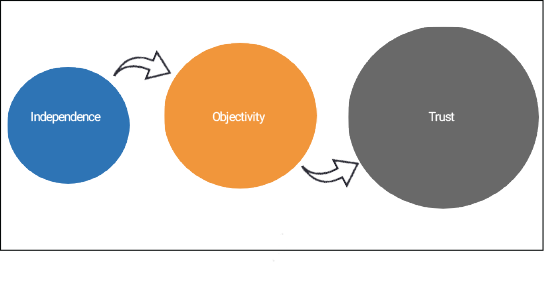
Bottom line: independence → objectivity → trust. That chain is what accelerates delivery, protects scope, and keeps relationships healthy—without the political costs that slow projects down.
Specialized Project Experience Drives Success
Plainly put: a third‑party PM who has led several Human Capital Management (HCM) or similar enterprise‑class platform replacements in recent years has an advantage that internal PMs rarely can acquire. Organizations do not swap out enterprise systems such as HCM, ERP, or CRM often enough for insiders to build deep repetition. Specialists do. That repetition translates into specific, practical knowledge that reduces risk and speeds delivery.
What a specialist knows that a talented internal PM likely does not (yet)
- Data conversion traps. Which fields always bite on first pass (names, addresses, historical job data, leave balances), how to define error budgets and reconciliation gates, and how many mock conversions are actually needed.
- Payroll and timekeeping edge cases. Union rules, overtime calculations, retro pay, multi‑state tax edge cases, and how to validate them early so the first payroll does not become the test.
- Role and security design pitfalls. How to align job architecture to roles and permissions, prevent segregation‑of‑duties conflicts, and avoid over‑provisioned access that triggers audit findings.
- Integration realities. Which interfaces are brittle, which require daily rather than batch cadence, how to stage cutover with finance, identity, benefits, and data warehouse teams.
- Cutover choreography. The hour‑by‑hour plan, rollback criteria, staffing for command center and bubble support, and the few checkpoints that must be “green” before proceeding.
- Performance and volume testing. How to size realistic scenarios (open enrollment, payroll close), what constitutes exit criteria, and how to secure environments that mirror production closely enough to matter.
- Vendor statement‑of‑work gaps. The clauses that push risk back to the client, which deliverables need acceptance criteria, and the change‑budget patterns that prevent scope creep from becoming a surprise.
- Regulatory and compliance checkpoints. ACA reporting, tax updates, privacy and access controls, and documentation that auditors will actually accept.
- Training and adoption patterns. Why role‑based training beats department‑based sessions, how to measure proficiency rather than attendance, and how to sequence communications to support behavior change.
- Reporting and analytics readiness. What operational reports executives expect on day one, how to validate them against legacy systems, and how to avoid “shadow spreadsheets.”
Practice uplift as a byproduct. Specialized project experience can also bring modern delivery practices into the organization. Sometimes the internal team needs to see the practices in action—such as iterative methods for requirements and testing, or disciplined change control that complements time-boxed work—before they fully understand how they will operate. The external PM pairs with internal PMs and functional leads, introduces new standards, templates, and techniques. The result is not only delivery, but growth in institutional capability that remains after the engagement ends.
The pattern applies across enterprise platforms
Although the examples above draw on Human Capital Management, the same categories recur in other infrequent, high‑stakes platform changes—Electronic Health Records (EHR), Enterprise Resource Planning (ERP), Customer Relationship Management (CRM), and beyond to things such as identity and access management, contact center modernization, billing, core network. Here, specialized project experience brings playbooks and scar tissue that internal teams cannot reasonably develop when each organization faces these projects only once every many years.
Bottom line: internal PMs bring essential organizational context; specialists bring repetition and expertise that exposes pitfalls early, shortens timelines, and protects benefits—across HCM, ERP, CRM, and other high‑stakes platform changes.
When Third-Party PM Is Not the Right Fit
Not every initiative benefits from outside help—and saying so builds better outcomes. Here is when keeping delivery in‑house is usually the smarter move.
Strong fits for an internal PM
- Routine, repeatable work. Standard network upgrades, recurring patch cycles, seasonal reporting, policy rollouts, or well‑trodden automations with clear SOPs.
- High dependency on tacit knowledge. Success hinges on undocumented workflows, shadow systems, or sensitive stakeholder dynamics your internal PM already navigates daily.
- Low external risk/visibility. Slips will not impact compliance, customers, or executive commitments; timeline is flexible and scope is limited.
- Tight coupling to ongoing operations. The work is inseparable from business-as-usual (BAU) processes (e.g., minor EHR template changes, small payroll rule updates) where the internal PM’s proximity speeds decisions.
Situations that call for a hybrid model (internal lead + targeted external help)
- Narrow skill gaps. Use a third‑party specialist for a slice (e.g., data conversion lead, test manager, cutover commander) while your internal PM retains overall ownership.
- Short surge windows. Bring an external Project Management Office (PMO) analyst or scheduler to stand up cadence, then transition back to the internal team.
- Vendor wrangling spikes. Temporary honest‑broker role during contract finalization or user acceptance testing (UAT)/bubble support, then hand back to internal leadership.
- Warning signs not to outsource
- The project’s value case relies on deep local trade‑offs (work rules, union agreements, legacy exceptions) that only insiders can balance credibly.
- You need to institutionalize capability (build your PM discipline) more than you need to land a one‑off outcome—keep the work internal and invest in playbooks.
| A Simple Decision Guide | |
| Project Criteria | Recommendation |
| Is the work repeatable and well understood? | Keep it internal. |
| Is success mostly about insider trust and tacit knowledge? | Keep it internal. |
| Are stakes high (regulatory/financial/customer), the timeline fixed, and vendor count high? | Consider third party or hybrid. |
| Will specialized project experience materially reduce risk? | Choose third party or hybrid. |
| Do we also want to grow internal capability? | Choose a hybrid model with explicit knowledge transfer milestones. |
Bottom line: default to internal PMs for recurring, tacit‑knowledge‑heavy, lower‑risk work. Reach for third‑party help when stakes, complexity, or specialization exceed the internal curve—and use hybrid models to fill targeted gaps while building your own bench.
Addressing Common Concerns
Leaders often raise the same five objections to outsourcing a PM role: cost, control, communication, cultural fit, and vendor relations. These concerns are legitimate and worth addressing directly. With clear governance, disciplined cadence, and purposeful onboarding, each can be managed in a way that protects outcomes and relationships.
- Cost: External PMs are an incremental expense, but they often save money by preventing overruns, managing scope, and accelerating benefits realization—areas where large programs commonly stumble.
- Control: You stay in charge. A clear governance model (steering committee, change authority, RACI) keeps decision rights with internal leadership.
- Communication: Experienced PMs establish predictable rhythms (weekly executive readouts, risk heatmaps, milestone burn-up, vendor performance scorecards).
- Cultural Fit: Good practitioners adapt quickly; a short, purposeful onboarding (stakeholder map, decision forums, glossary, “red lines”) smooths integration.
- Vendor Relations: An impartial PM actually strengthens vendor relationships by clarifying success criteria and removing mixed messages and being able to call both the implementers and the clients to task when they fall short.
Conclusion
Third‑party project management is not about handing off responsibility. It is about raising the probability of success when it matters most. Independence gives you an objective, honest‑broker PM who improves vendor execution, speeds decisions, and strengthens negotiations—without the political drag that slows programs down. Surge capacity keeps your leaders focused on the business while the project runs on cadence. And specialized project experience—the kind developed by running ERP/EHR/HCM or core network programs repeatedly—pulls risk forward, keeps benefits intact, and often leaves behind better practices.
This paper also drew clear lines on when not to outsource and where hybrid models make more sense. If your work is routine, tacit‑knowledge‑heavy, and low‑risk, keep it internal. If stakes, complexity, or vendor count climb—or if a once‑a‑decade platform is on the table—outside help (or a targeted hybrid) can materially de‑risk delivery.
Use the checklist to pressure‑test your next initiative. If you hit several triggers, a short, structured review—objectives, risks, vendors, timeline, decision forums—will tell you whether independence and specialized project experience will actually move the needle.
For Alaska’s mid‑to‑large enterprises, that is not a luxury. It is a strategic advantage.
About Pango Technology
Pango Technology is Anchorage-based and Alaska-focused. Our Pangos pair business-aligned delivery, clear communication, and excellence in execution with practical, tool-agnostic methods. We have managed programs with multiple vendors, third-party integrators, and tight regulatory windows. If you are evaluating whether an external PM can tip the balance on your next initiative, we are happy to help.
Works Cited and Further Reading
McKinsey & Company, “Delivering large-scale IT projects on time, on budget, and on value.”
McKinsey & Company, “Managing large technology programs in the digital era.”
Project Management Institute, Pulse of the Profession® 2024: The Future of Project Work.
- PDF: https://www.pinnaclemanagement.com/hubfs/Pinnacle%20Approved%20Docs/Tools%20%26%20Assets/PMI%20Pulse%20of%20the%20Profession%202024%20Report.pdfPMI Disciplined Agile, “Vendor Management.”
- Overview: https://www.pmi.org/disciplined-agile/process/vendor-management
- Practices: https://www.pmi.org/disciplined-agile/process/vendor-management/vendor-management-practices
- Strategies: https://www.pmi.org/disciplined-agile/process/vendor-management/vendor-management-strategies
Prosci, “The Correlation Between Change Management and Project Success.”
Prosci, Best Practices in Change Management, 12th Edition (Executive Summary).
- Overview: https://empower.prosci.com/best-practices-change-management-executive-summary
- PDF: https://www.proscieurope.co.uk/hubfs/Best-Practices-in-Change-Management-12th-Edition-Executive-Summary.pdf?hsLang=en
Standish Group, CHAOS research (paywalled).
- Public summaries:
- PDF excerpt: https://simpleisbetterthancomplex.com/media/2016/10/chaos-report.pdf
- University of Texas at Dallas scan (1995): https://personal.utdallas.edu/~chung/SYSM6309/chaos_report.pdf
- Overview article: https://thestory.is/en/journal/chaos-report/